Architect blog: AI-powered development ecosystem
We are building a software development ecosystem powered entirely by AI. Here is the architecture.
Most engineering teams I talk to are using AI the same way, a coding assistant here, a chat tool there. Useful, but disconnected. Each tool does its job in isolation. The workflow between them is still manual.
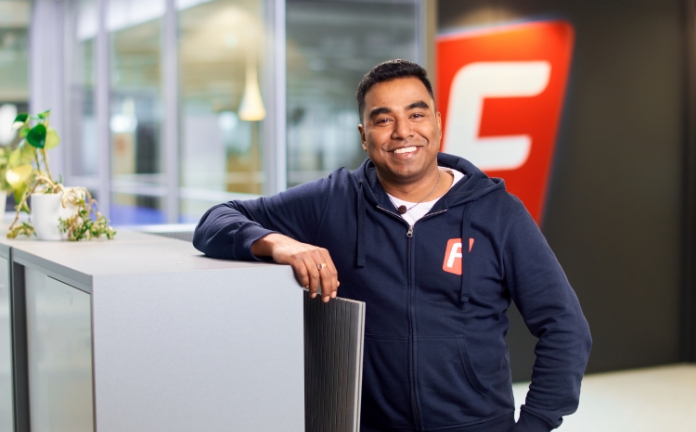
We decided to go further beyond the horizon At fter.io, we are rolling out a connected AI ecosystem that spans the entire software development lifecycle. From the moment a feature is planned to the moment it is deployed, AI is embedded in every step – not as a point tool, but as the intelligent layer connecting them all.
Here is what the stack looks like:
→ Plan – Claude Plugins drive sprint planning, engineering reviews, and code reviews. The decisions that used to live in meetings now have structure, context, and AI input from the start.
→ Design – Claude Design is our design environment, connected to our design system and code repository. Components are consistent across design and implementation. One source of truth for everyone.
→ Code – Claude Code generates code that is already aligned to our design system, our architecture standards, and our existing patterns. Not generic output — code that fits how we build.
→ Test – Playwright handles automated testing, integrated into the flow. Quality is built in from the start, not added at the end.
→ Deploy – The pipeline connects everything so that the journey from ticket to production is automated, auditable, and consistent.
Claude is the intelligent layer running through all of it – connecting plan, design, code, test, and deploy into a single coherent workflow.
One thing that surprised us: because Claude has access to the full context, tickets, design system, architecture standards, code history, it is also building product knowledge automatically. The system understands what has been built, why decisions were made, and how components relate. That institutional knowledge no longer lives only in people’s heads.
We are still rolling this out. It is not perfect. Every ecosystem like this takes time to tune, because the hardest decisions are not about the tools. They are about the workflow itself: what AI should own, what humans should own, and where the handoffs happen.
But the direction is clear. The future of software development is not AI assisting humans at individual steps. It is AI embedded in the entire flow, with humans focused on the decisions that require judgment.
Next I will share what this changes for Product Owners, Product Designers, Developers, and Testers – because the impact looks very different from each seat.
– Mugunthan Ravichandran, Principal Software Architect & AI Transformation Lead